Practitioner Note · October 2026
Ten Questions Before You Sign a Trust-Platform Contract
Most trust companies choose an administration platform once a decade. The questions below are the ones that separate a system that records what happened from a system that can show how the trustee thought. Ask them before you sign, not after you migrate.
The decade-long decision
In the last three years a large share of the trust industry has changed its core system. The established vendors consolidated and pushed their clients from on-premise to cloud. Newer entrants arrived with cleaner interfaces. Almost every chairman I speak to describes the same experience: a migration measured in months, a heavy integration effort for everyone, and a sense of relief when it was over.
Relief is not the same as satisfaction. When I ask what the new system now tells the chairman that the old one did not, the answer is usually a better report. Rarely is it a better record of the trustee’s own judgment.
That gap is not an accident. Every platform in this market was designed by software engineers who learned the trust business from the outside. They built what engineers build well: entity registers, ledgers, billing, workflow engines. What they could not build, because they had never sat in the chair, is a system that treats the trustee’s decision as the primary record and the transaction as its consequence.
The result is that a board can see every payment and still be unable to show, two years later, what the officer saw, what was proposed, and why the trustee decided as it did. A Swiss court recently convicted a financial institution whose controls were, by its own account, sound. It had reported. It could not show the work between seeing and acting. That is the standard regulators and courts now apply, and it is the standard against which a platform should be bought.
The ten questions that follow are the ones I would put to any vendor, including my own.
Ten questions
-
1
Who designed it, and had they ever administered a trust?
Ask for the professional history of the people who defined the product, not the people who sell it. A platform conceived by engineers will optimise the data model. A platform conceived by a trustee will optimise the decision.
Weak answera list of advisory clients consulted during development.
-
2
How long does migration take, and who does the classifying?
Thousands of documents and emails have to arrive named, linked to the right entity and filed under a convention someone can defend. Ask whether the system does that on arrival or whether your administrators route each item by hand. Ask for a timed demonstration on a real sample, not a case study.
Weak answer“typically under six months with our implementation partner.”
-
3
When an officer leaves, how long before a senior can pick up the portfolio?
The real cost of turnover is not the vacancy. It is the senior time spent reconstructing the past from emails, attachments and the previous officer’s sparse notes. Ask what the system shows a team leader on day one about which requests are urgent and which entities carry risk, without asking IT for access to a mailbox.
Weak answer“everything is in the document management system.”
-
4
What does the chairman see live, without requesting a report?
A report is a snapshot someone prepared. Ask what the managing director, compliance and the auditor see at the moment an action is taken, aggregated by firm and by team, with drill-down to the file. If the answer involves a month-end pack, the system records; it does not govern.
Weak answera dashboard of key performance indicators.
-
5
Does it record the decision, or only the transaction?
This is the question that matters most and is asked least. A payment entry proves a payment. It does not prove that the trustee considered the trust deed, the letter of wishes, the beneficiary’s circumstances and the alternatives. Ask whether the system captures what the officer saw, what was proposed, what was decided and by whom, as a single contemporaneous record.
Weak answer“the audit trail logs every change.”
-
6
Is artificial intelligence native to the design, or added to the workflow?
Most vendors have added a model to search, summarise or draft inside a workflow engine built years earlier. That accelerates existing work. It does not change what the system knows. Ask whether the platform was designed around the proposal-decision-execution sequence from the first line of code, and whether the human decision is structurally required rather than optional.
Weak answer“AI-enabled” without a description of where the human sits.
-
7
Can an officer walk into an unplanned client meeting in one hour?
The complete state of a structure, including what has been paid, what is pending and what was last decided, should be available immediately and without assembly. Ask for it live in the demonstration, for a structure the vendor did not prepare.
Weak answer“our reporting module can generate that.”
-
8
Are outstanding client fees visible firm-wide, in real time?
Recoverability is governance. A chairman who cannot see receivables by entity and by officer without asking finance is managing by anecdote. Ask whether unpaid fees sit beside the structure they belong to, visible to the people accountable for them.
Weak answer“billing integrates with our accounting module.”
-
9
Where does the data live, and who at the vendor can see it?
For a Swiss-regulated firm the answer should be a jurisdiction, a hosting model and a statement that the vendor cannot access client data without explicit permission. Ask what happens to the data if the vendor is sold, as several in this market have been.
Weak answer“ISO-certified cloud.”
-
10
What is the all-in price before signature, and how does it scale?
Licence, implementation, migration, support and the terms on which the price rises with users and entities. A vendor who cannot state this on one page before the contract is pricing the relationship, not the software.
Weak answer“it depends on your configuration.”
What the answers add up to
Questions two, three and seven measure time: how much of your senior people’s day goes into finding and reconstructing rather than deciding. Questions four, five and eight measure visibility: whether the board governs the firm or reads about it afterwards. Questions one, six and nine measure design: whether the system was built from the trustee’s chair or from the server room. Question ten measures the vendor.
No platform will answer all ten well. The useful exercise is to notice which questions make the vendor change the subject. Those are the ones to weigh.
A trust company does not buy software for its registers. It buys the record it will one day have to produce for an auditor, a supervisor, a beneficiary or a court, and the hours its best people will spend producing it.
The system that makes that record a by-product of ordinary work, rather than a project after the fact, is the one worth a decade.
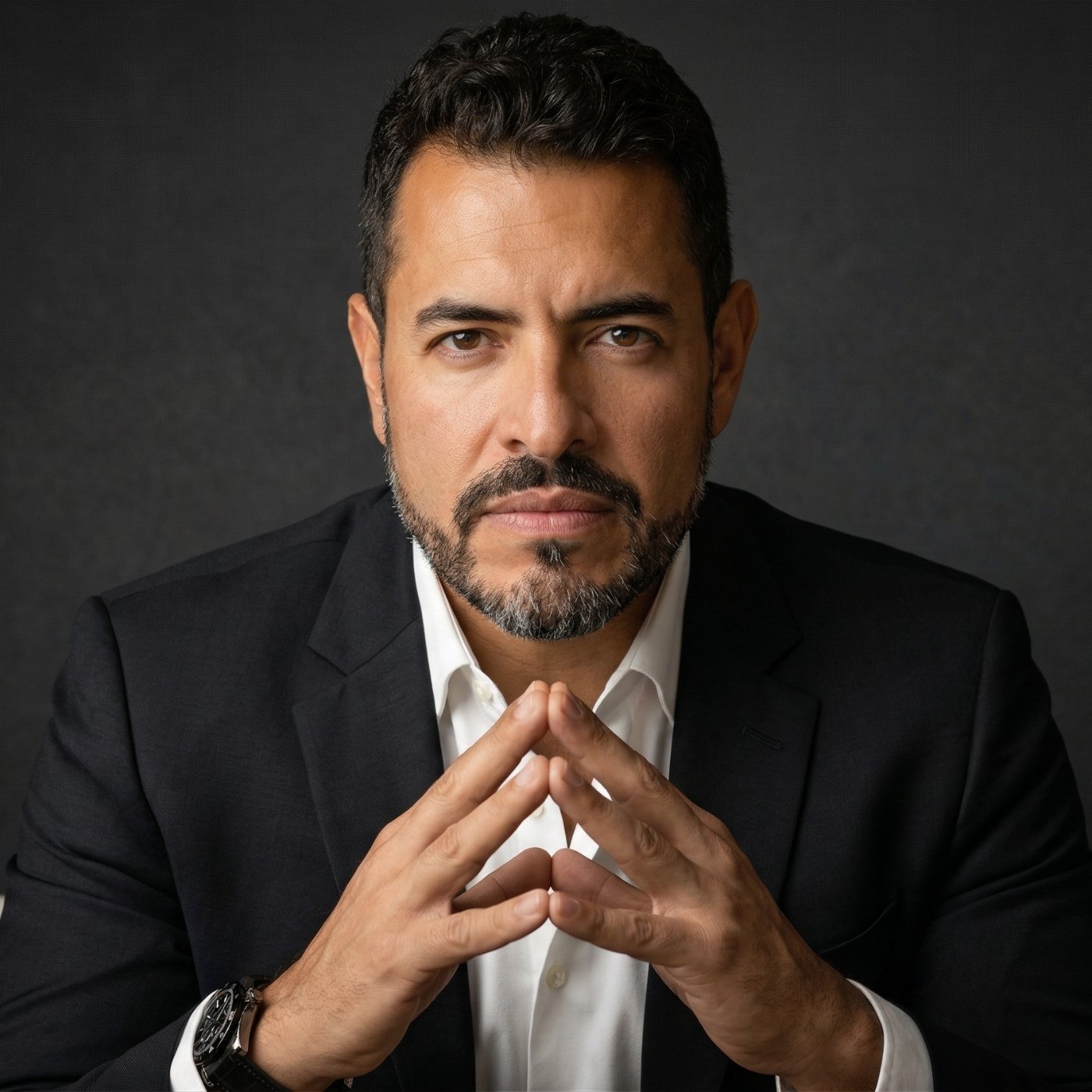
Frédéric Sanz
Founder & CEO, Fiduciacorp · LinkedIn
Frédéric Sanz is Founder and CEO of Fiduciacorp and the creator of VERIDUCIA, a governance and administration platform for trustees and family offices. He has administered trust and wealth structures across twelve jurisdictions over his entire career, including at JP Morgan Private Bank, TMF Group, CSC Group (Intertrust) and Rhone Trustees, formerly the Pictet trust business. He is a member of the AI STEP Working Group, a STEP Affiliate Member, and the author of AI Unleashed for Trustees & Family Offices (2024) and Governing AI in the Trust Company (2026).