Practitioner Note · No. 01 · May 2026
The Reporting Cycle
A practitioner note on compliance reporting in regulated trust companies.

For many Swiss trust companies authorised under FinIA and subject to the AMLA, compliance reporting has become a continuous operating burden.
CRS filings, prudential submissions to supervisory organisations, beneficial ownership updates across administered entities, risk-based AML reviews across relevant trust parties, economic substance reporting for offshore vehicles, entity-by-entity registrations: together they form a rolling calendar rather than a series of isolated events.
The officers exercising fiduciary judgement increasingly carry the burden of extracting and reconciling the data required to support that calendar, most acutely during CRS season.
The architecture supporting this work was rarely designed for it.
Entity data sits in administration platforms. KYC material sits in document management systems. Decision records sit in committee minutes, correspondence and files. The reporting officer must pull from all three under deadline pressure, often reconstructing the final output in Excel and Word.
The result is familiar: surge cycles, weekend work, duplicated checking and data lineage that becomes hardest to verify precisely when the deadline is closest.
The pattern can look normal until something slips.
The accountability question has also moved closer to operations.
In February 2025, the Office of the Attorney General of Switzerland fined Morgan Stanley (Switzerland) CHF 1 million under Article 102 of the Swiss Criminal Code after concluding that the organisation had failed to take the reasonable and necessary organisational measures required to prevent an employee's qualified money laundering.
Organisational adequacy is an enforcement issue, not merely a policy aspiration.
At the same time, the reporting perimeter is expanding.
The amended Common Reporting Standard entered into force in Switzerland on 1 January 2026, with the first reporting on 2026 data occurring in 2027. The revised standard extends the reporting framework to, among other things, certain electronic money products, central bank digital currencies and indirect crypto-asset exposure held through derivatives and investment vehicles.
The Crypto-Asset Reporting Framework has also been incorporated into the Swiss legal framework, but will not apply in Switzerland before 2027 at the earliest.
The direction is therefore clear: more data, more classifications, more reconciliations and more evidence supporting each reporting position.
Fiduciacorp is building the reporting and deliberation layer across the systems fiduciaries already use, not in place of them.
The reporting layer moves the operating model from periodic scramble to continuous state.
Information required for CRS, economic substance work, AML review cycles and related entity reporting is maintained in structured form throughout the year rather than reconstructed when a filing deadline arrives. The objective is not simply to produce a return. It is to preserve the lineage between the underlying entity, the relevant person, the source information, the classification applied and the eventual reporting output.
The deliberation layer addresses a different problem.
A trustee may make a discretionary decision today and be asked two years later by a regulator, beneficiary's adviser, court, auditor or acquirer to explain how that decision was reached.
At that point, the quality of the answer depends less on memory than on the quality of the contemporaneous record.
A properly structured decision record helps evidence the adequate deliberation required of trustees under authorities such as Pitt v Holt. It identifies the question considered, the information available at the time, the relevant fiduciary considerations, conflicts, alternatives, advice obtained, authority to act and the reasons supporting the eventual decision.
That record should also be built with disclosure in mind.
Dawson-Damer v Taylor Wessing LLP [2017] EWCA Civ 74 is a reminder that conventional trust-law confidentiality principles are not the only disclosure regime that may become relevant to material held by trustees and their advisers. The practical lesson is not that every deliberative document will be disclosable. It is that fiduciaries should create records on the assumption that, in the right circumstances, someone other than their original author may eventually read them.
That changes how fiduciary infrastructure should be designed.
The reporting problem and the deliberation problem are usually treated separately. They are not separate.
Both depend on the same underlying discipline: structured information, traceable sources, clear responsibility, contemporaneous records and the ability to reconstruct what was known, what was decided and why.
The firms that solve this will not merely file faster.
They will be able to grow without increasing operational fragility at the same rate as assets, structures and reporting obligations. They will be able to answer regulatory and transactional diligence questions with evidence rather than reconstruction. And they will preserve institutional memory when the individuals who originally handled a structure are no longer the people responsible for it.
That is the infrastructure problem Fiduciacorp is addressing.
The underlying thesis is developed further in the forthcoming September 2026 issue of Trust Quarterly Review, in “The Fiduciary Inversion.”
If your firm has reached the point where the reporting calendar constrains growth, or where individual exposure for a failure to report under Article 37 AMLA has become a live governance question, the door is open.
Further reading
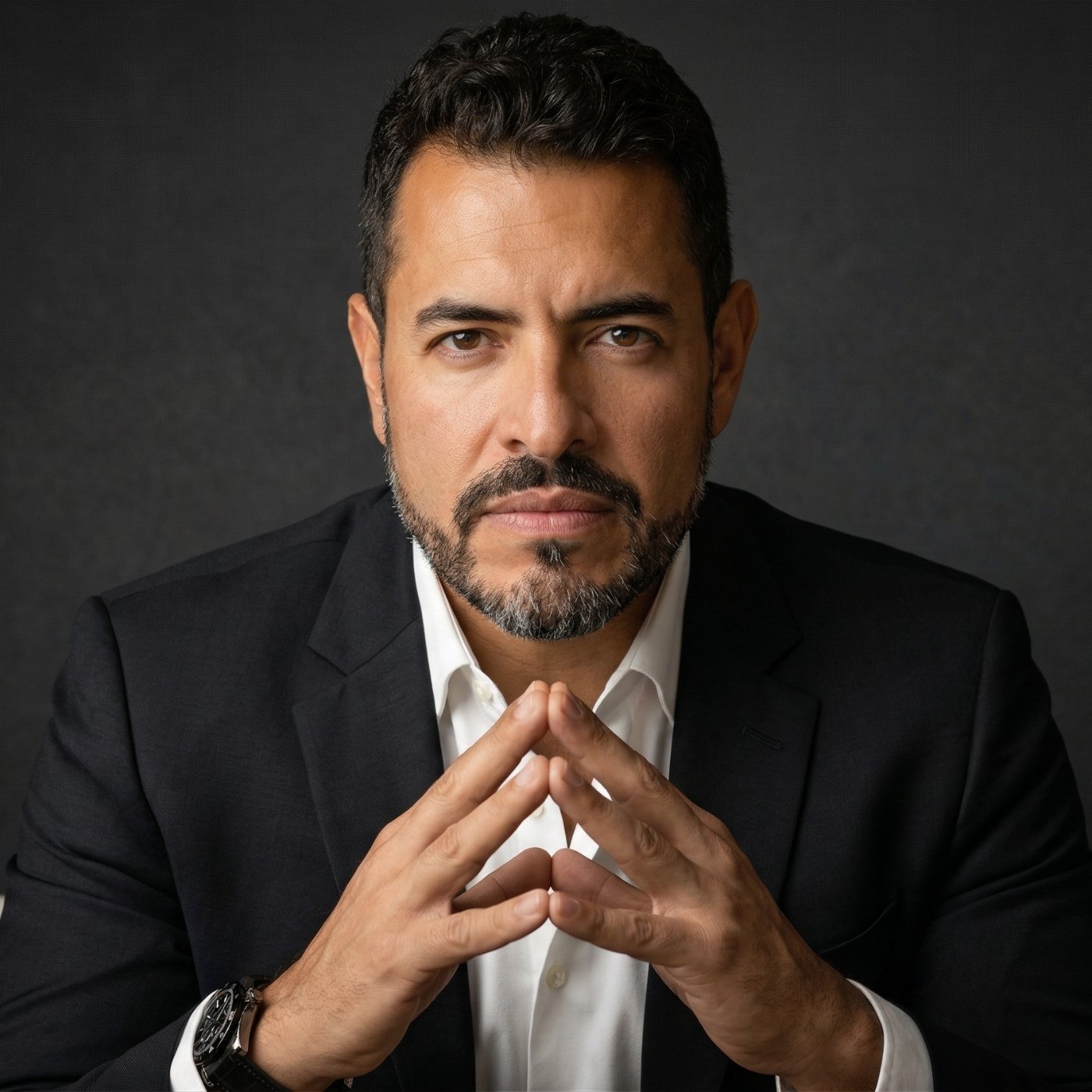
Frédéric Sanz
Founder & President, FiduciaCorp · LinkedIn